You searched for a funnel builder and found twenty comparison tabs, each crowning a different winner before it knew what you sell or how much you can spend. The right tool depends on a handful of facts about your business, and most of them you already know.
I would start from the first job the tool has to do, then the budget, and only then the feature lists. Beginner threads such as this r/Entrepreneur discussion of ClickFunnels mostly argue about price, while buyers comparing Kartra and GoHighLevel argue about how hard each is to learn.
Answer the six questions below. You get the tool we would start you on, a runner-up for when your answers sit near a line, the reason in plain words, and links to the review, the head-to-head between the two, and our funnel tool cost calculator for what the plan will bill you.
Answer six questions
Pick one answer for each. Nothing is stored or sent anywhere.
Your pick appears here after you answer. If nothing happens, the rules under "How the picker decides" give the same answer by hand.
How the picker decides
The rules run in this order, and the first one that matches your answers sets the result.
- You build for clients. GoHighLevel, because its pricing counts client sub-accounts rather than your contacts: Starter includes three and Unlimited has no cap. A solo marketer with a couple of clients and little money gets Systeme.io as the runner-up.
- Your budget is zero. Systeme.io, the only plan in our catalog that stays free with no card. The runner-up is the tool you would move to: Leadpages if you collect leads, ElasticFunnels if you send paid clicks to a network offer, ClickFunnels otherwise.
- Paid ads that end in a sale on your page. ElasticFunnels, which rotates page variants under one URL so the ad platform keeps optimizing the same link (its homepage describes the server-side rotation). ClickFunnels is the runner-up for course and coaching sellers, Systeme.io for everyone else.
- Paid ads that end in a form. Leadpages, whose paid-search page promises no visitor caps on any plan. Unbounce is the runner-up for the two higher budgets, where its Experiment tier for testing becomes affordable.
- Paid ads that send buyers to someone else's checkout. Leadpages for the presell page, with ElasticFunnels as the runner-up for a buyer who wants to test angles without changing the ad's URL.
- Courses or coaching on the top budget. Kajabi, with Kartra as the runner-up for creators who also run an affiliate program.
- Courses or coaching on the middle budget. ClickFunnels, with Kartra as the runner-up. A list between 500 and 2,500 flips the two, because Kartra's Starter tier covers that range.
- Everything else. A paid Systeme.io plan, with ClickFunnels as the runner-up, or Leadpages when the job is collecting leads.
The picker chooses among the eight tools we review, and every result adds one thing to know before you sign up, taken from that vendor's pricing page. Results are a pick and a runner-up, never a score. Where a tool sits in our full ranking, and why, is on the best funnel tools for startups roundup, and our methodology page covers how we evaluate funnel tools from vendor pages and long-term user reports.
Two worked examples
A course seller buying ads
She sells a digital course to her own audience, runs Meta ads to a sales page, takes payment on her own checkout, has about 3,000 contacts and picks the middle budget. Rules one and two do not match, and rule three does: paid traffic that ends in a sale.
The picker returns ElasticFunnels as the pick. Its plans bill on page views, so 3,000 contacts never move the price, and it can upload each sale to Google Ads as a click conversion with its order value if she adds Google later. The thing to weigh is its age: it is newer than ClickFunnels and has far less independent review coverage, so the 14-day trial without a card is the place to check its claims against her own traffic.
ClickFunnels is the runner-up. Its Launch plan holds a 3,000-person list easily and takes no cut of sales. The two are set side by side in ElasticFunnels vs ClickFunnels. Kartra, which many course sellers also look at, would put her on Growth: its Starter tier stops at 2,500 contacts.
A beginner with no ad budget
He coaches, posts on social media, wants to sell a small first program and has no money for software yet. Rule two catches him before anything else and returns Systeme.io. Its free plan covers up to 2,000 contacts, 3 sales funnels, 1 course and 1 custom domain, never expires and asks for no card. When people ask for a cheaper alternative to ClickFunnels, this is usually the first name in the replies.
The runner-up is ClickFunnels, which is where many Systeme.io users look once they want more polish. Systeme.io vs ClickFunnels covers the switch. If his list passes 2,000, the free plan stops taking new contacts and he moves to a paid Systeme.io tier.
My take: I would judge a funnel tool by the first thing it has to do for you, which is either take a payment, collect a lead or serve a client. Answer question six honestly too. Many of the regretted purchases in the threads we read came from buying the plan a course guru uses instead of one a first-year business can carry, so I would start on the cheapest tool that does that first job and move only when a cap forces it.
The cost calculator shows what your pick will cost once your list grows.
The eight tools the picker chooses from
Each card opens the full review and carries the one limit the picker shows with that tool.
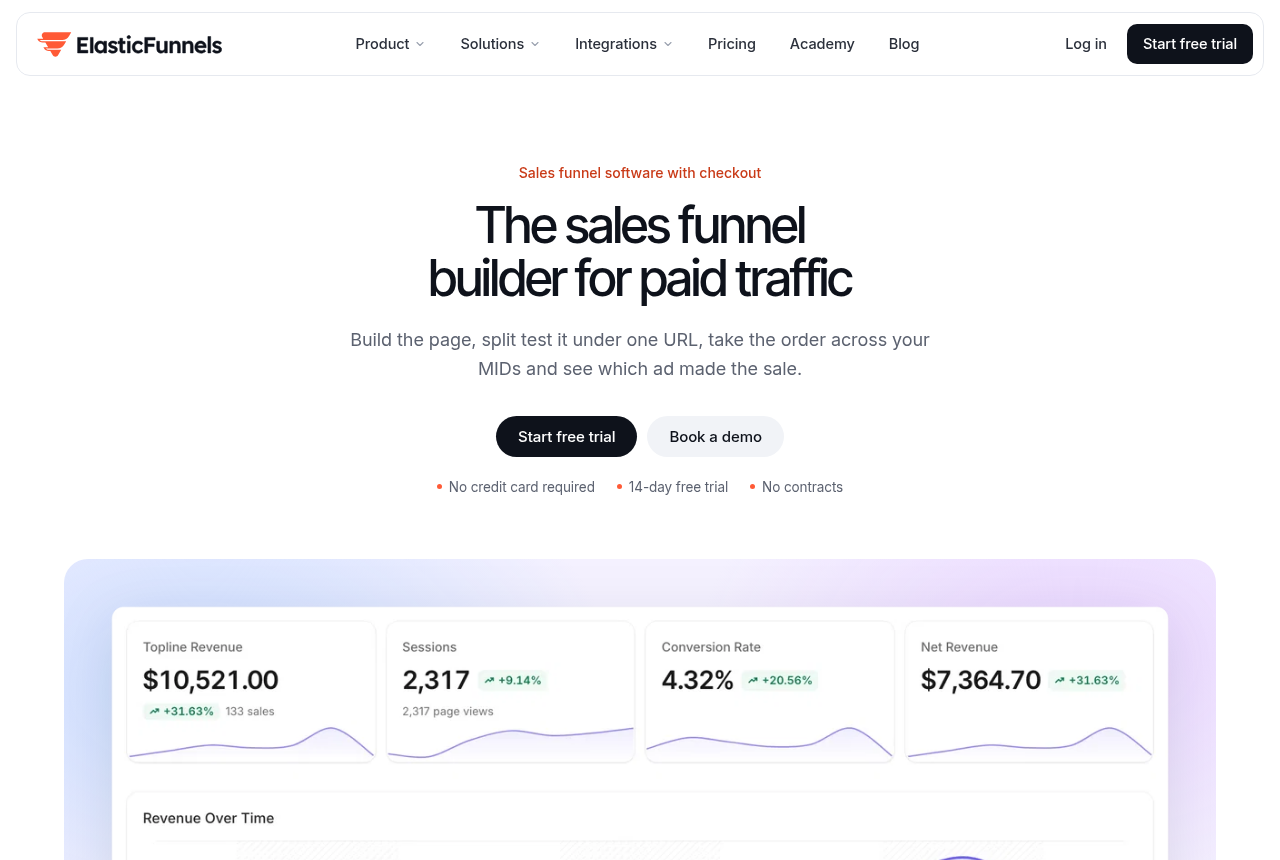
ElasticFunnels
It is newer than the tools it competes with and has little independent review coverage yet, which the 14-day trial with no card partly makes up for.
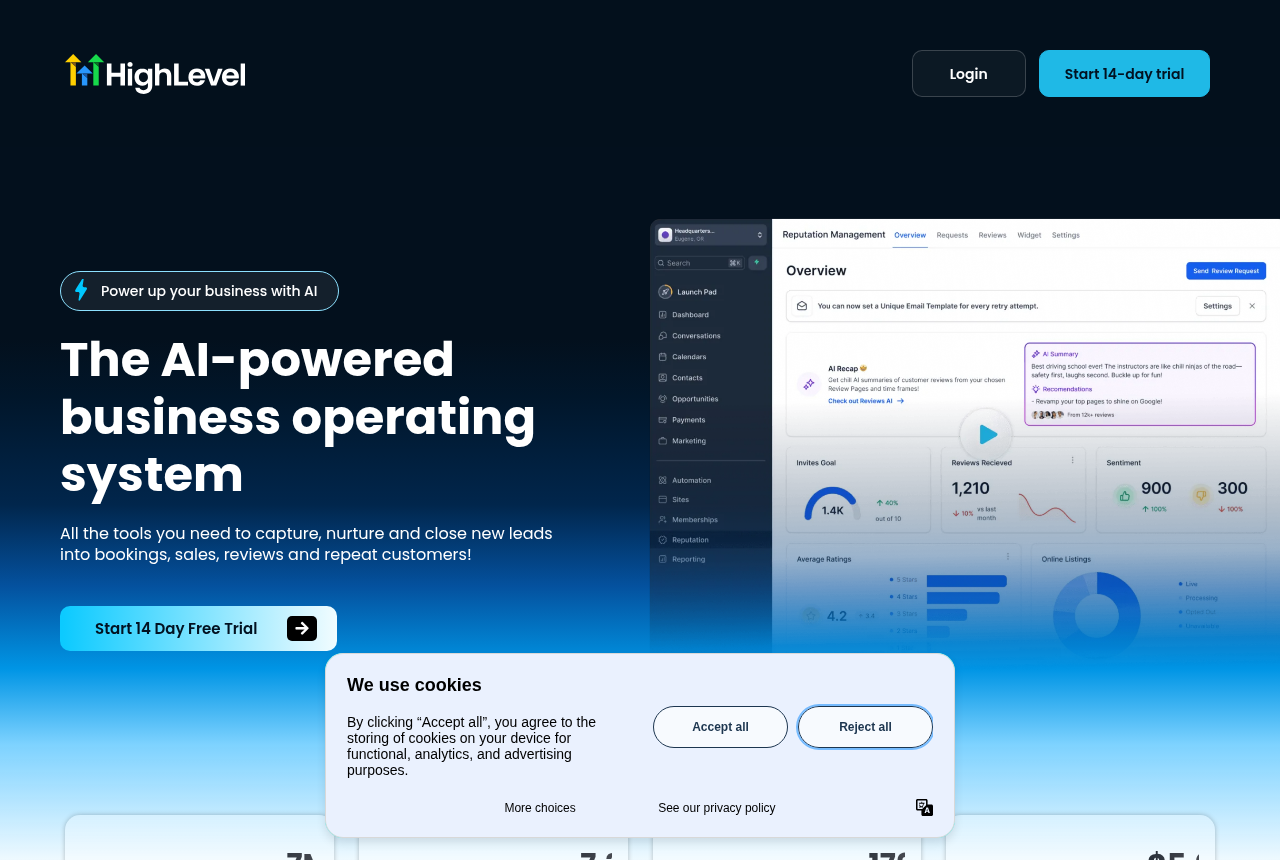
GoHighLevel
Text messages, calls and AI features are billed by use on top of the subscription.
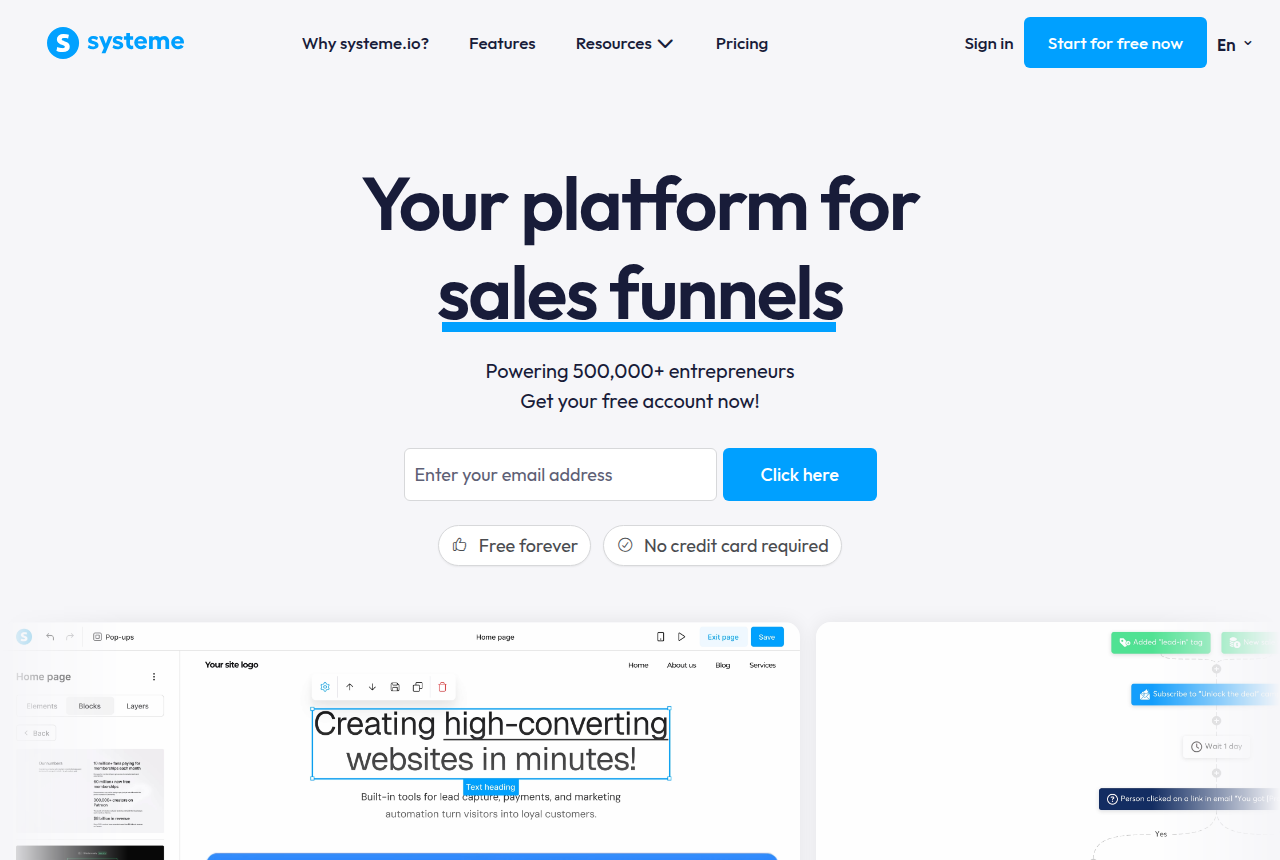
Systeme.io
The free plan never expires but stops at 2,000 contacts, 3 sales funnels and 1 course.
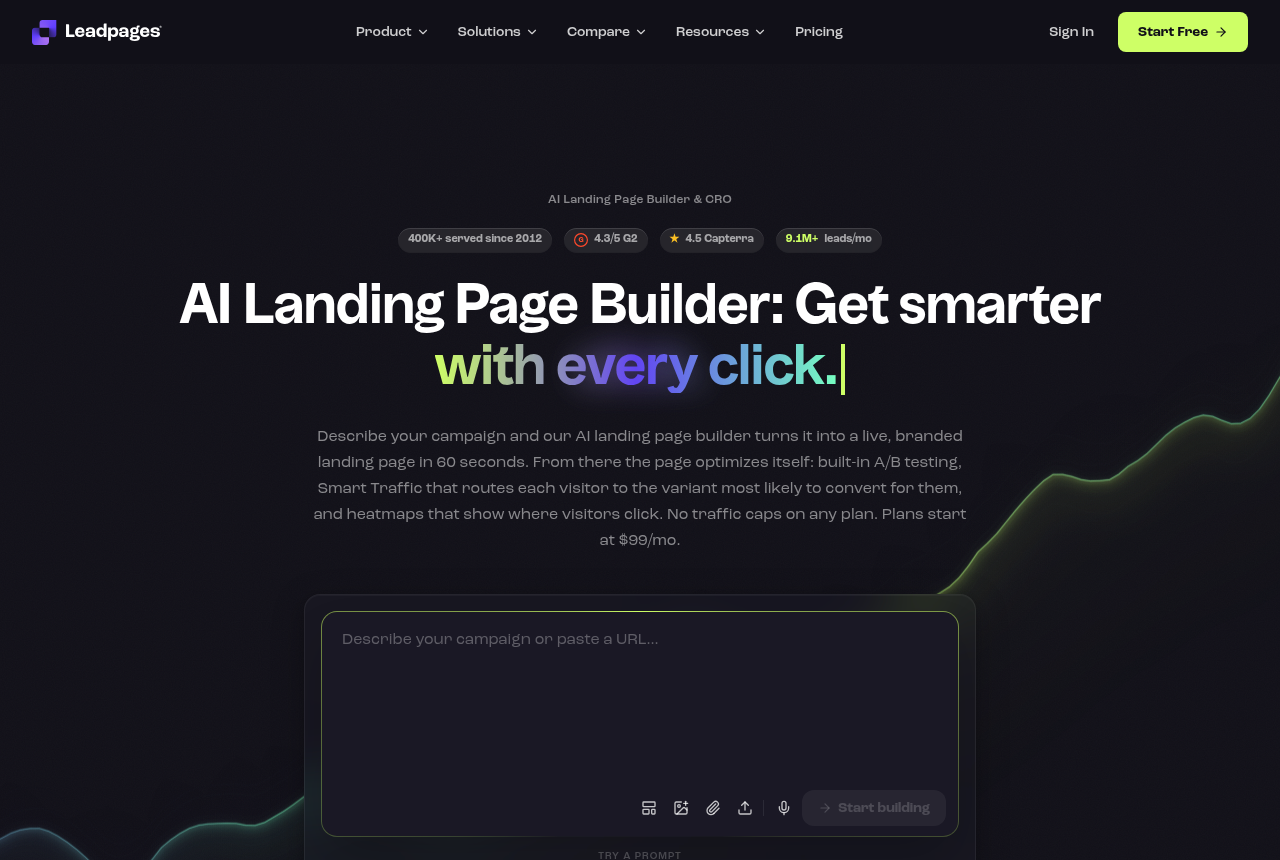
Leadpages
A/B testing starts on the Grow plan. The publish-only tier has none.
Kartra
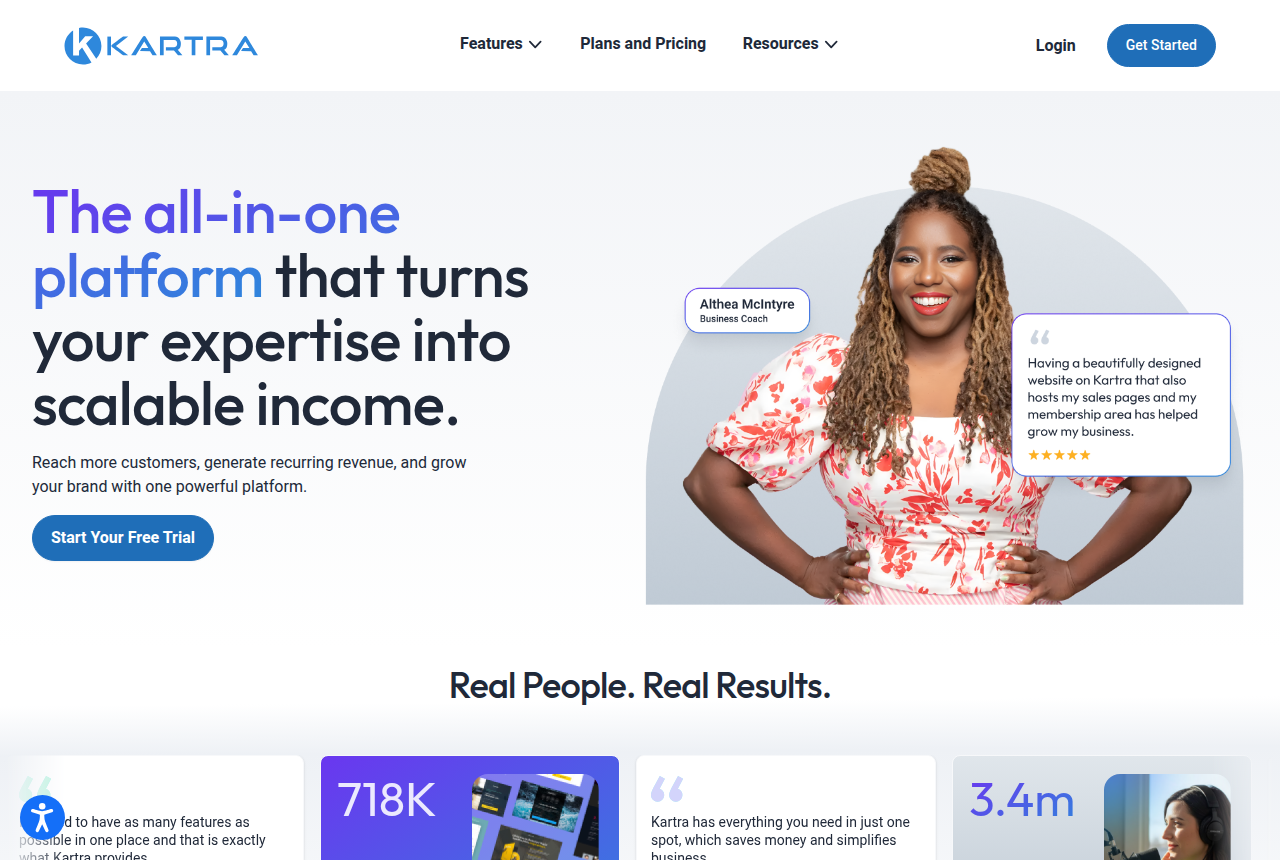
Essentials holds 500 contacts and takes 5% of sales. Lists above that start on Starter, which holds 2,500.
ClickFunnels
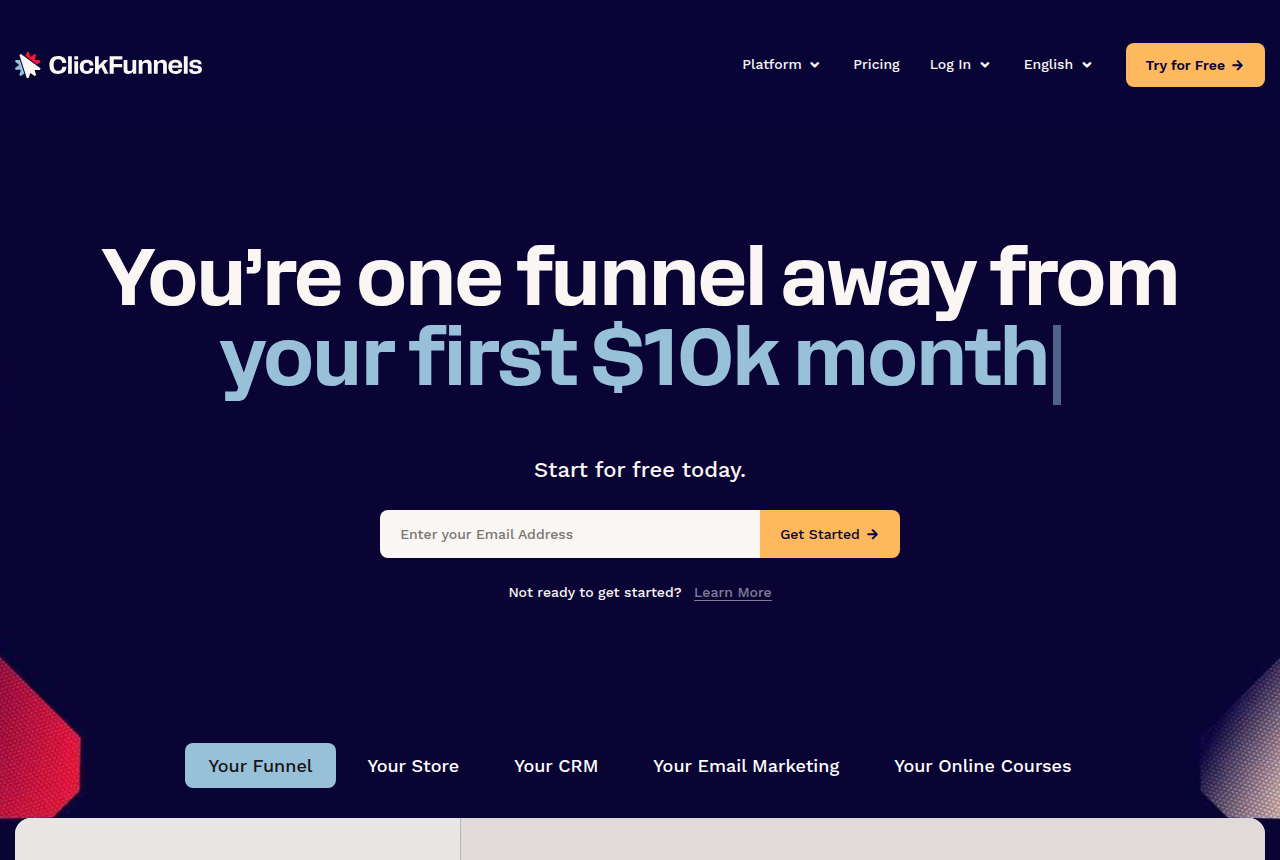
Launch caps contacts and monthly email sends, and sends are usually the cap a weekly newsletter hits first.
Unbounce
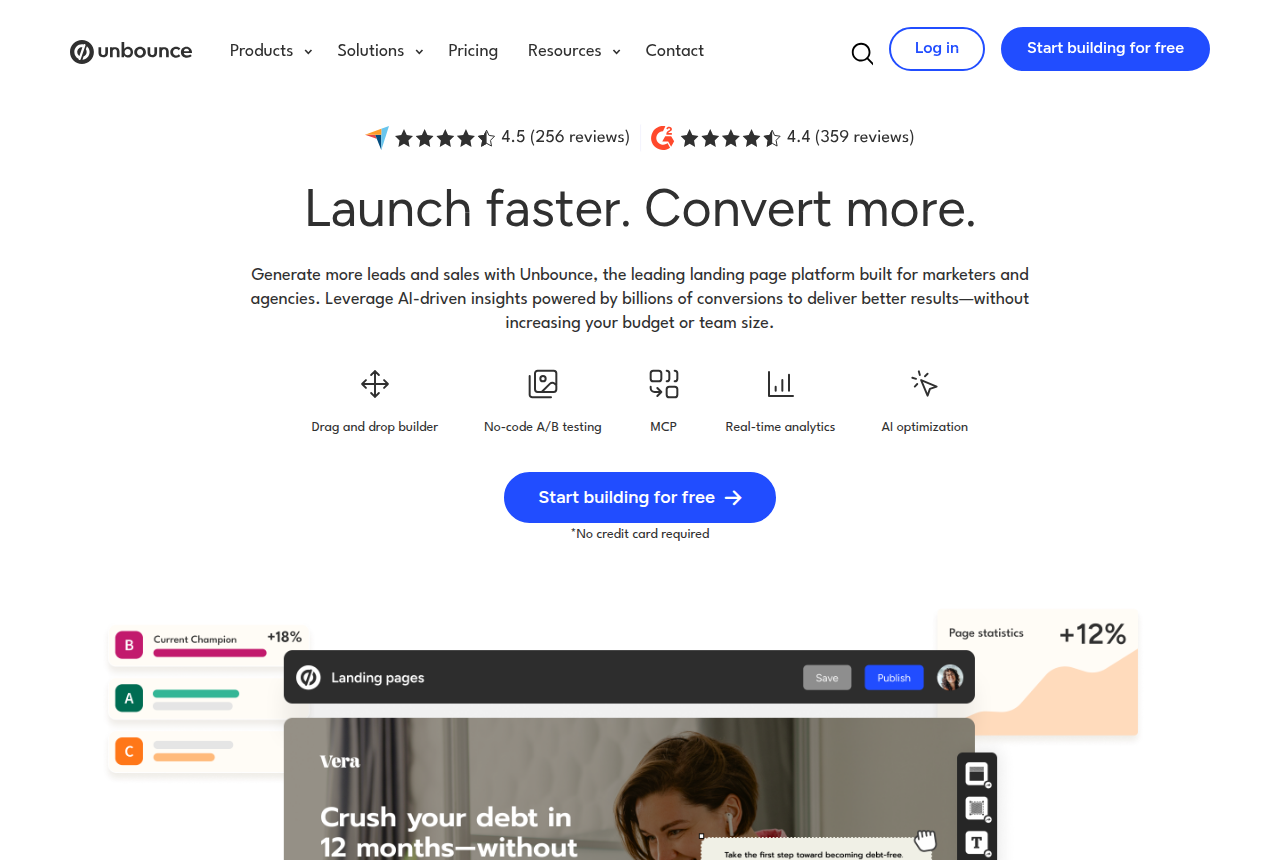
A/B testing starts on the Experiment plan, and every plan caps monthly unique visitors.
Kajabi
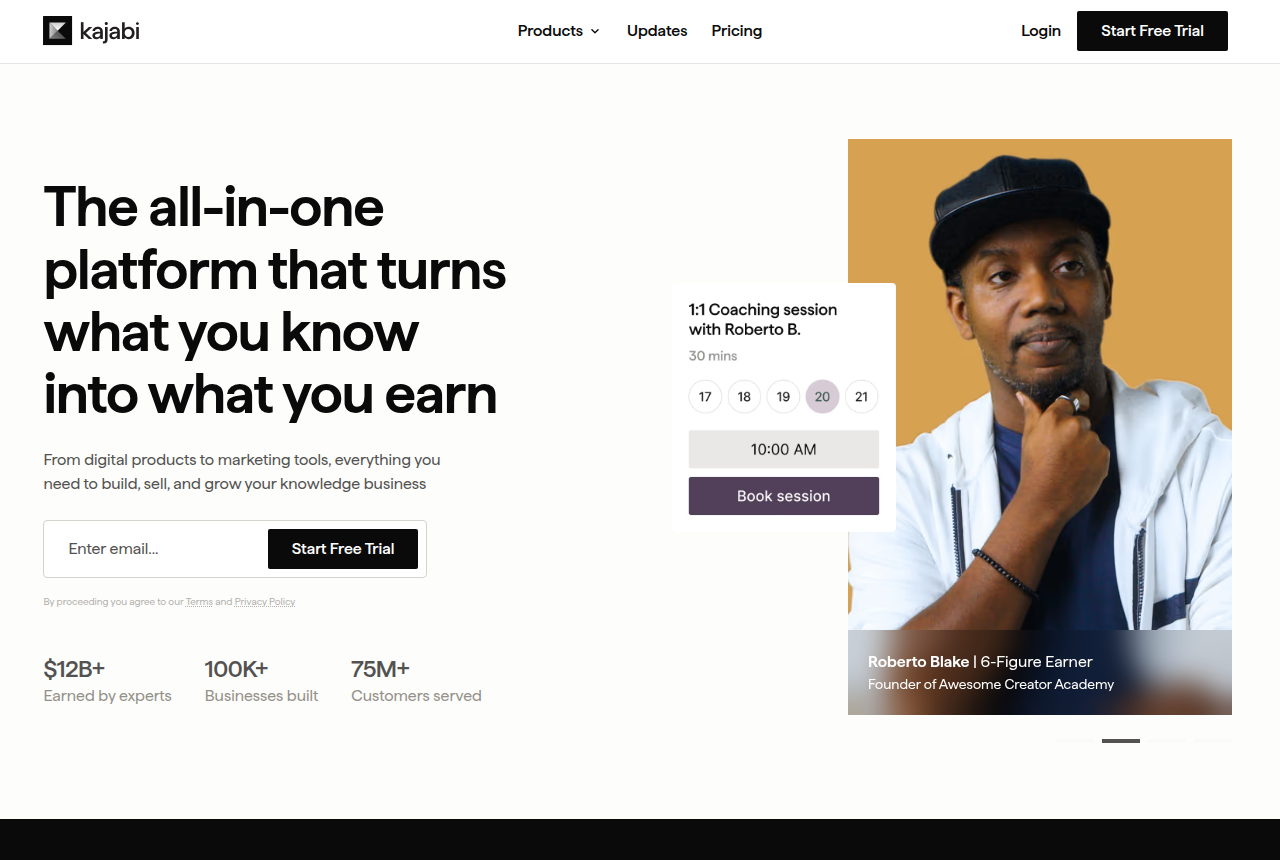
Kajabi itself says Basic is the plan for people who have not sold anything yet.
What six questions cannot settle
The picker leaves out two common setups. If your site runs on WordPress and you want pages inside wp-admin, or you sell from a Shopify store and want the page inside the store, the answer turns on your platform more than on these six questions. It also cannot see features you need on day one, such as a helpdesk or SMS, which is where Kartra and GoHighLevel pull ahead of tools that price lower.
If your answers fall between two rules, read both reviews and the head-to-head linked in your result. Our Leadpages vs Unbounce, Kartra vs Kajabi and Systeme.io vs GoHighLevel pages cover the closest calls.
Frequently asked questions
Is there a free funnel builder that does not expire?
What is the easiest funnel builder for a beginner?
Do I need a funnel builder or just a landing page tool?
I build funnels for clients. Which tool do agencies use?
Does the picker rank the tools?
Changelog
Related

Written by
Marta Ovalle
Editor, funnel & checkout tools
Marta Ovalle leads Funnel Critic's coverage of funnel builders and checkout platforms. She reads the long-running threads where operators compare tools after months of live ad spend, cross-checks every claim against the vendor's own docs and pricing pages, and confirms prices with each vendor before a verdict goes live. She writes most of the roundups and pricing pages, and she decides when a ranking changes.