Systeme.io integrations
The connectors a solo account actually uses are listed on the pricing comparison. Google Sheets, Google Calendar, Zoom, ActiveCampaign, SendGrid and Twilio SMS are checked on Free, Startup, Webinar and Unlimited. Google Meet is named in that same block. Under payment processors the page lists Stripe, Apple Pay, PayPal, Razorpay, Flutterwave, Mercado Pago, Xendit and cash on delivery. The line that applies to every tier names Stripe and PayPal.
ActiveCampaign is a one-way sync. From Settings, then Integrations, you paste the ActiveCampaign API URL and key and choose a trigger: a contact created, a tag added, or a tag removed. A tag that Systeme.io has and ActiveCampaign does not is created on the ActiveCampaign side. Changes you make in ActiveCampaign stay there. The setup article calls the connector optional, because sequences already run inside Systeme.io.
SendGrid is how you send through an account you already pay for. GetResponse, Brevo and other email tools go through Zapier, using triggers and actions, as the autoresponder article describes. That article leaves the plan unnamed. The public roadmap still asks for a search-contact action and a create-blog-post action, so those two are requests, and the Zapier connection itself is already in use.
Shopify, Calendly, Make.com and Discord sit on the under-consideration board. A store or a scheduler from that list connects through Zapier, or through a webhook you host.
Webhooks and the public API
Webhooks are under your profile picture, then Settings, then Webhooks. Each one needs a name, an HTTPS address and a secret. The webhook article offers six events: contact created, tag added, tag removed, opt-in, a new sale, and a sale canceled. Sales include funnels and creator stores. A failed delivery is tried again up to 12 times. The developer note sets the first retry at 4 seconds. Each later wait is four times longer, up to about a day, and the attempts run for about five days. If fewer than 80 percent of those deliveries succeed over five days, that subscription switches off, and you can switch it back on. One account can hold 10 webhooks.
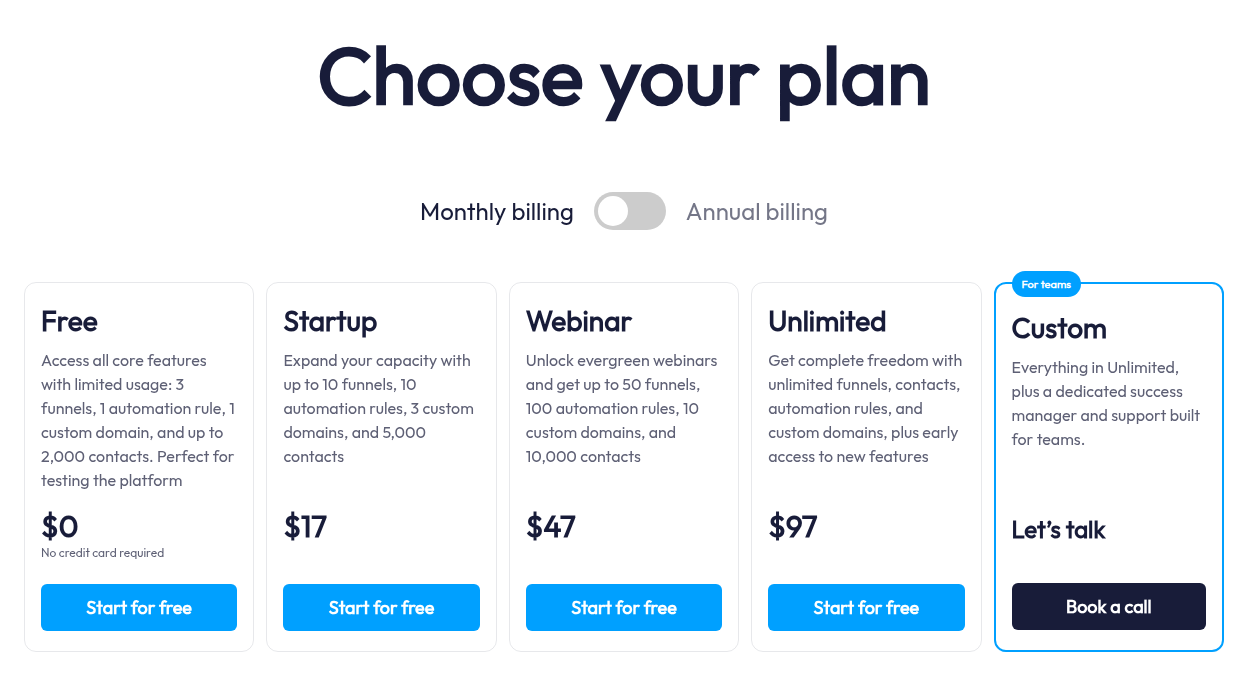
The public API is on the same Settings screen, under MCP and API keys. You can keep three keys. Leave the expiration empty and the key stays active. The API article from 12 October 2026 says a key can create and update contacts, tags, newsletters, campaigns, funnels, courses, communities, coupons, products, offers and calendar events, and it can create webhooks. The rate is on the pricing comparison, which the help articles do not repeat: 30 requests a minute on Free, 60 on Startup, 120 on Webinar, and no per-minute cap on Unlimited.
A paid-traffic stack beside this login
ElasticFunnels is a funnel platform for teams that buy ads. It builds the pages, runs same-URL split tests, hosts the checkout, and keeps a click, an order, a rebill and a refund on one record. Someone who has outgrown a cheap all-in-one often weighs that stack against a login that already includes email and a course. It has been in development since 2023, so it is newer than Systeme.io, and independent write-ups are still scarce. That is what you would expect until more long reviews exist. Until you run real volume through it, you are largely taking the vendor's word for how it behaves.
Systeme.io customer support
Start in the help center. A how-to or a marketing question belongs in the Facebook group, where the getting-help article says members, staff and the founder answer. A broken page goes to the contact form, which asks for the account email, the page address, and anything else that explains the snag.
The live-chat article says those requests are handled by email, seven days a week, including holidays. The hours article says the team is available 24 hours a day. The contact page puts the average near two hours and says a heavy queue can take longer. The comparison checks 24/7 email support on every plan.
Routine help stays on that form. You book both Google Meet calls by submitting that form. A one-hour kickstart session is free with any annual plan and with Unlimited billed month to month. On the monthly comparison that row is checked only under Unlimited. A two-hour technical session is $57 once, and a free account can buy it. The phone article explains both calls. Deliverability questions (bounces, DMARC, sending practice) go to the same desk.
Published reviews scatter around that average. The reviews cited above run from a same-day reply to waits of a couple of weeks, and one thread calls the desk slow. If the problem is messy, leave a day for the reply.
A buyer who wants a published phone number can read the GoHighLevel review, which covers an agency desk that documents one. See Systeme.io pricing for which plan raises the API allowance.
Does Systeme.io have an app?
Nothing you install runs the account. On the public roadmap, still under consideration, the card A systeme.io mobile app asks for notifications and analytics on a phone. It has not been moved to Planned or Launched. The why page says communities stay in the browser, with no branded app of their own. Students open a course in a browser on their phone. The dashboard is that same site, once you are signed in. Pages you publish are built to work on a small screen. Laying out the funnel is still easier on a desktop.
A course business that wants students inside an app under its own name is looking at a different product. The Kajabi review covers that branded app.